
From Reactive to Proactive: How AI Transforms Reputation Management |
Stop firefighting negative reviews and start building your reputation strategically |
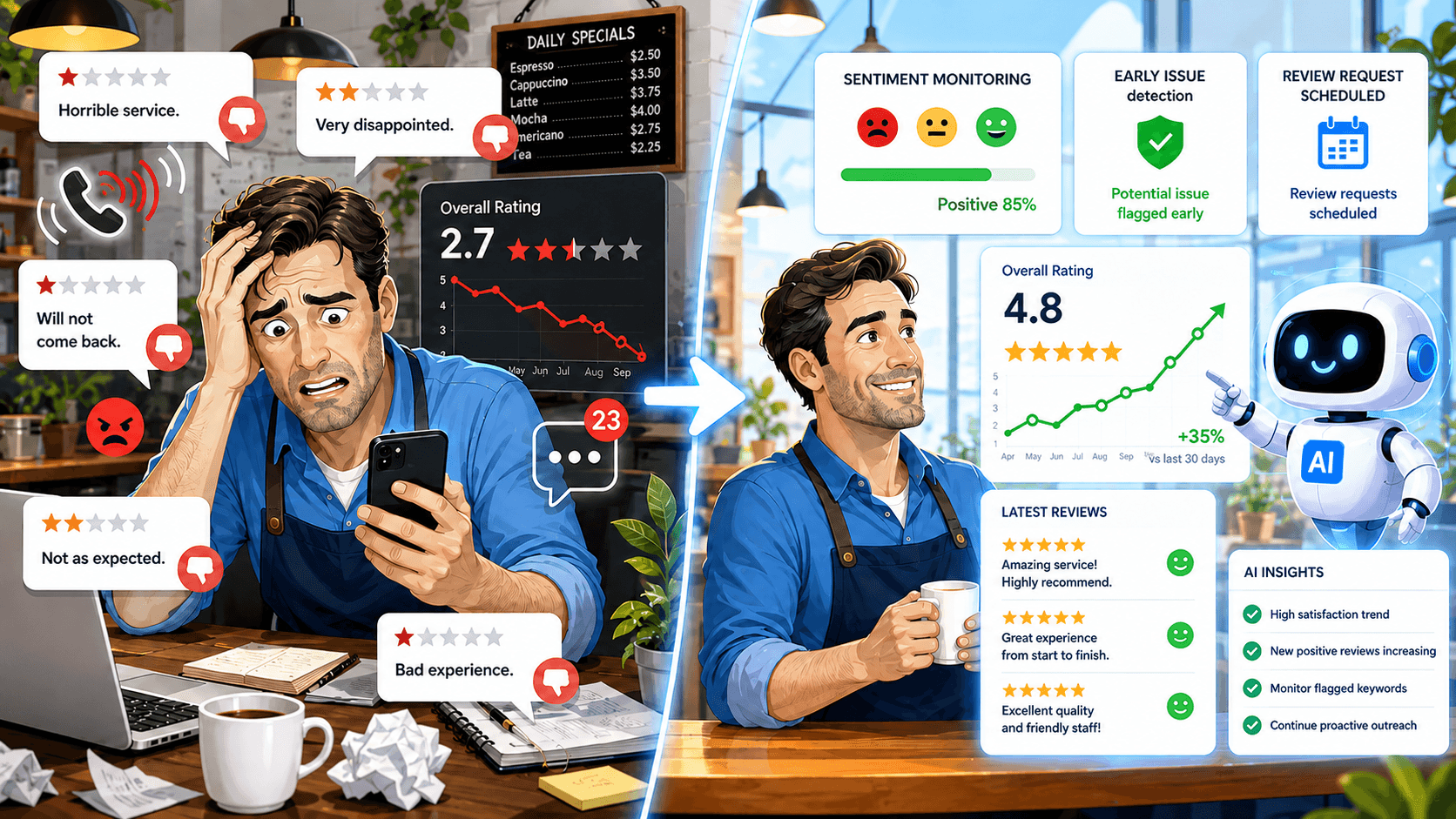
Most local businesses operate in reactive mode when it comes to their online reputation. They wait for reviews to appear, then scramble to respond. They discover negative mentions after they've already spread. They're always one step behind.
AI is flipping this dynamic completely. Instead of reacting to problems after they occur, AI-powered tools help businesses anticipate issues, prevent negative reviews, and proactively build their reputation.
The Old Way: Constant Firefighting
Traditional reputation management is like playing whack-a-mole. A bad review appears, you respond. Another one shows up, you address it. You're always reacting, never getting ahead of the curve. This approach is exhausting and often ineffective—by the time you're responding, the damage is already done.
Business owners spend their time damage control instead of building their brand. They're so busy responding to problems that they never have time to prevent them.
The New Way: Predictive Intelligence
AI changes this by identifying patterns before they become problems. Sentiment analysis can detect when customer satisfaction is trending downward, even before negative reviews start appearing. Monitoring tools can spot mentions of your business in forums where complaints are brewing.
For example, if AI analysis shows that wait time complaints are increasing week over week, a restaurant owner can address staffing issues before those complaints turn into public reviews. If sentiment around a specific product is declining, a retailer can investigate and fix the issue before it impacts their overall rating.
Proactive Review Generation
AI also helps businesses proactively generate positive reviews. Instead of waiting for customers to leave feedback, AI tools can identify satisfied customers and automatically send review requests at the optimal time.
Tools like Rep Manager AI and Reviewly.ai analyze customer interactions and send review requests when sentiment is highest—right after a positive service experience, a successful purchase, or a compliment to staff. This approach generates more reviews and ensures they're genuinely positive.
Strategic Reputation Building
With AI handling the monitoring and response generation, business owners can focus on strategic reputation building. They can identify their strongest attributes and emphasize them in marketing. They can address weaknesses before they become public complaints. They can build a reputation proactively instead of defensively.
A salon in Kingston used AI insights to discover that clients consistently praised their consultation process. They made this a central part of their marketing, and their review volume increased 40% in three months.
The Bottom Line
Proactive reputation management isn't just more effective—it's less stressful. Business owners sleep better knowing their reputation is being built strategically, not defended reactively. They have time to focus on their business instead of their online presence. |



0 Comments
Join the conversation
Be the first to comment
Share your thoughts above.