The Seasonal Review Calendar: When to Ask, When to Prepare, and When to Catch Up |
A data-driven look at where consumers go — and where you should focus your energy |
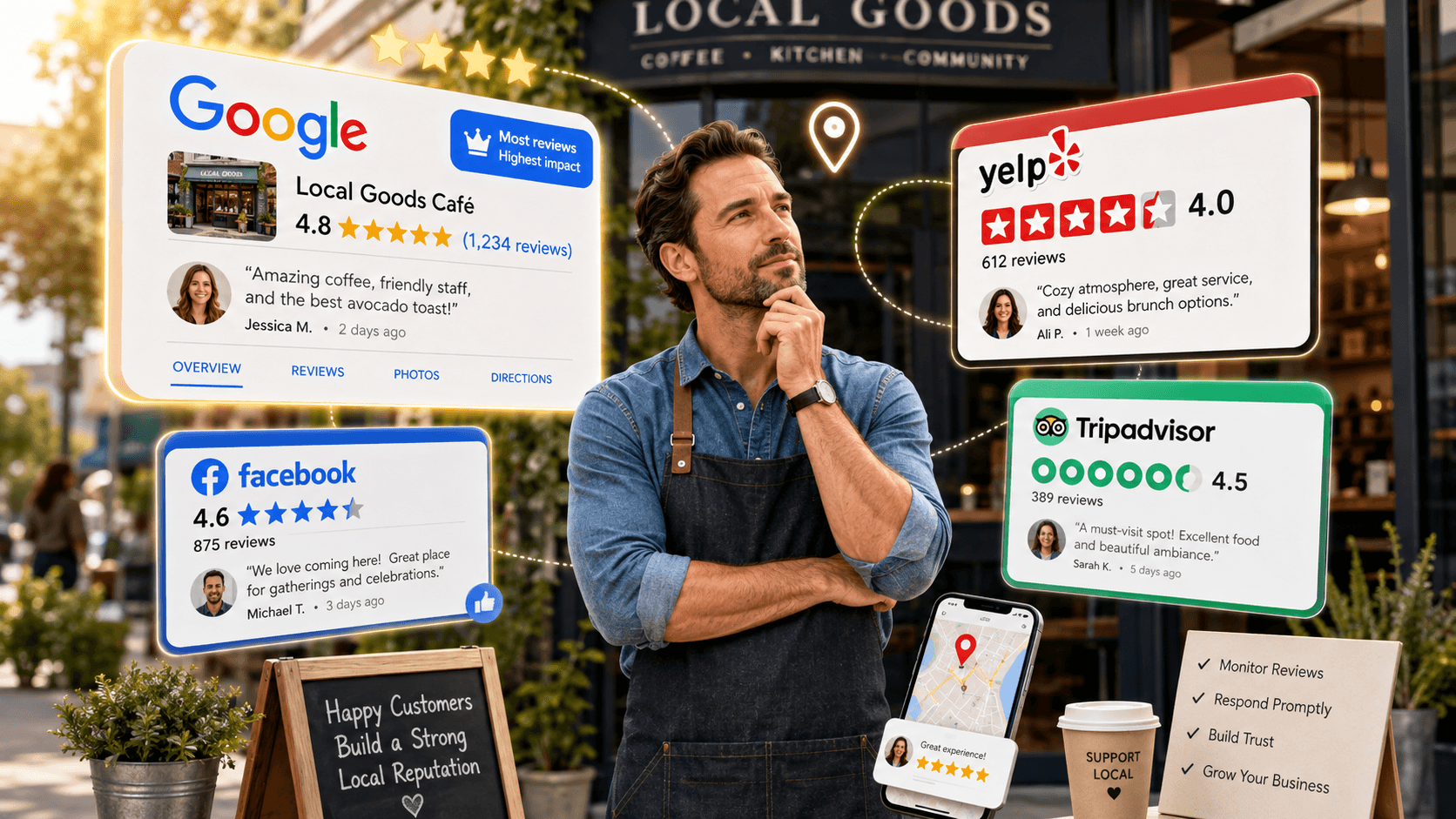
Not all review platforms are created equal. Google dominates with 73% of the review-platform market, but Yelp, Facebook, TripAdvisor, and industry-specific sites each play distinct roles in how consumers research and decide.
Here's a data-driven breakdown of the major platforms — and what each one means for your business.
Google: The Undisputed Leader
Market position: Google hosts an estimated 57-58% of all online reviews and holds roughly 73% of the review-platform market.
Trust level: Trusted by 71% of consumers — though that's down from 76% in 2024, suggesting some diversification.
Best for: Local businesses, retail, services — essentially anyone who depends on local search and Google Maps.
Why it matters: Google reviews appear directly in search results and on Maps. They're the first thing most consumers see when they search for your business. If you only manage one review profile, this is it.
Yelp: The Local Specialist
Market position: Added 22 million new reviews in 2025, bringing its cumulative total to 330 million. Still a major U.S. review platform.
Trust level: Trusted by 38% of U.S. consumers under 35. Overall trust is lower than Google, but it remains influential in specific categories.
Best for: Restaurants, home services, local consumer services — especially in the U.S.
Why it matters: Yelp is where people go to compare options carefully. If you're a restaurant or a contractor, Yelp reviews often carry significant weight in the decision process. Yelp's filtering algorithm also means that having a strong presence there requires consistent, authentic reviews.
Facebook: The Social Proof Layer
Market position: Used by about 40% of people worldwide for business reviews, though that's down from 48% in 2022.
Trust level: Thirty-four percent of U.S. consumers name Facebook as their most trusted review platform — but it's more about social proof than detailed comparison.
Best for: Community-oriented businesses, local awareness, social sharing.
Why it matters: Facebook reviews are less about detailed research and more about social validation. When someone sees that their friends or community members have had good experiences with a business, that carries weight. It's also integrated into a platform people already use daily.
TripAdvisor: The Travel Authority
Market position: Largest travel review platform globally.
Trust level: Trusted by 54% of consumers — the highest trust score of any platform in recent surveys.
Best for: Hotels, attractions, tours, restaurants tied to tourism.
Why it matters: If you're in the travel or hospitality industry, TripAdvisor is non-negotiable. Travelers rely on it heavily for planning, and its reviews are seen as highly credible because they come from people who specifically visited and reviewed their experience.
Industry-Specific Platforms: The Niche Authorities
Examples: Healthgrades and Zocdoc for healthcare, Avvo for legal services, Angi for home services, G2 and Capterra for software.
Trust level: Often the most persuasive in specialist categories because they attract high-intent buyers looking for specific expertise.
Best for: Professional services, healthcare, B2B, trades — anywhere buyers need specialized validation.
Why it matters: When someone is choosing a doctor, lawyer, or software platform, they often go to industry-specific sites because they trust the audience there more than a general platform. These reviews carry weight because they come from peers with similar needs.
How to Prioritize
You don't need to be on every platform. The data suggests focusing on 3-4 key platforms where your specific customers actually look:
The Bottom Line
Google is the foundation for almost every business. But depending on your industry, Yelp, Facebook, TripAdvisor, or industry-specific platforms may be where your most motivated customers are researching. Map your presence to your customer's journey, not to a generic "be everywhere" strategy. Focus your energy where it matters most.
Stay ahead of your reputation. Subscribe to ReputationShowcase.com for weekly insights on building trust that drives results. |



0 Comments
Join the conversation
Be the first to comment
Share your thoughts above.