
How Multi-Location Businesses Can Manage Reputation Without Losing Their Minds |
Running three, five, or twenty locations means three, five, or twenty Google profiles — and a review crisis at any one of them can spill over. Here's the system that keeps each location's reputation strong without the chaos. |
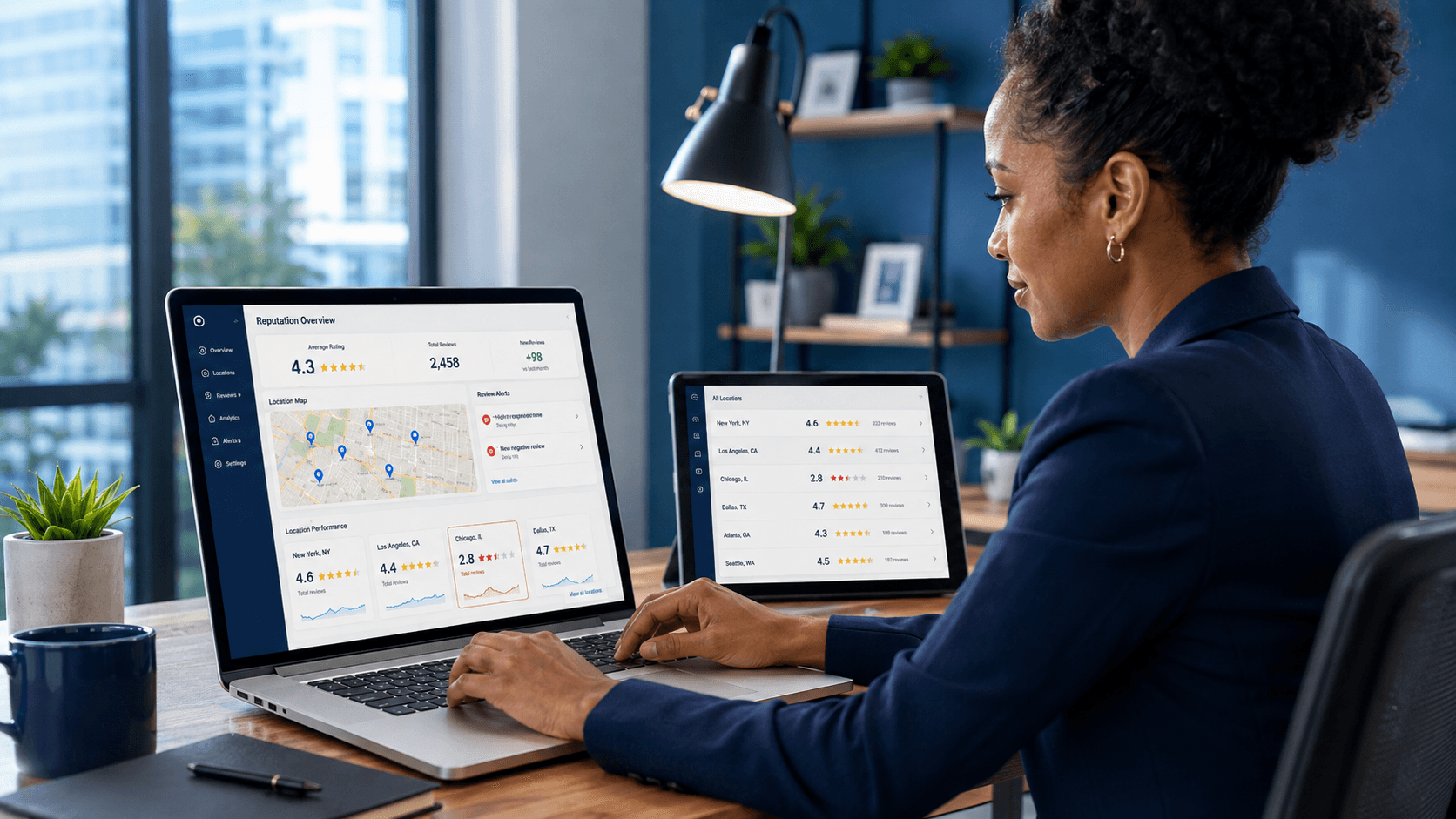
If you're reading this article, you probably already know that managing one location's online reputation is demanding. Now multiply that by every address your business operates out of. For multi-location businesses — restaurant groups, dental chains, auto service networks, or retail brands with several storefronts — reputation management isn't just about monitoring reviews. It's about building a scalable system where no single bad experience at one location drags down the entire brand.
The good news: the principles are the same. The execution just needs a bit more architecture.
Why Multi-Location Reputation Is a Different Beast
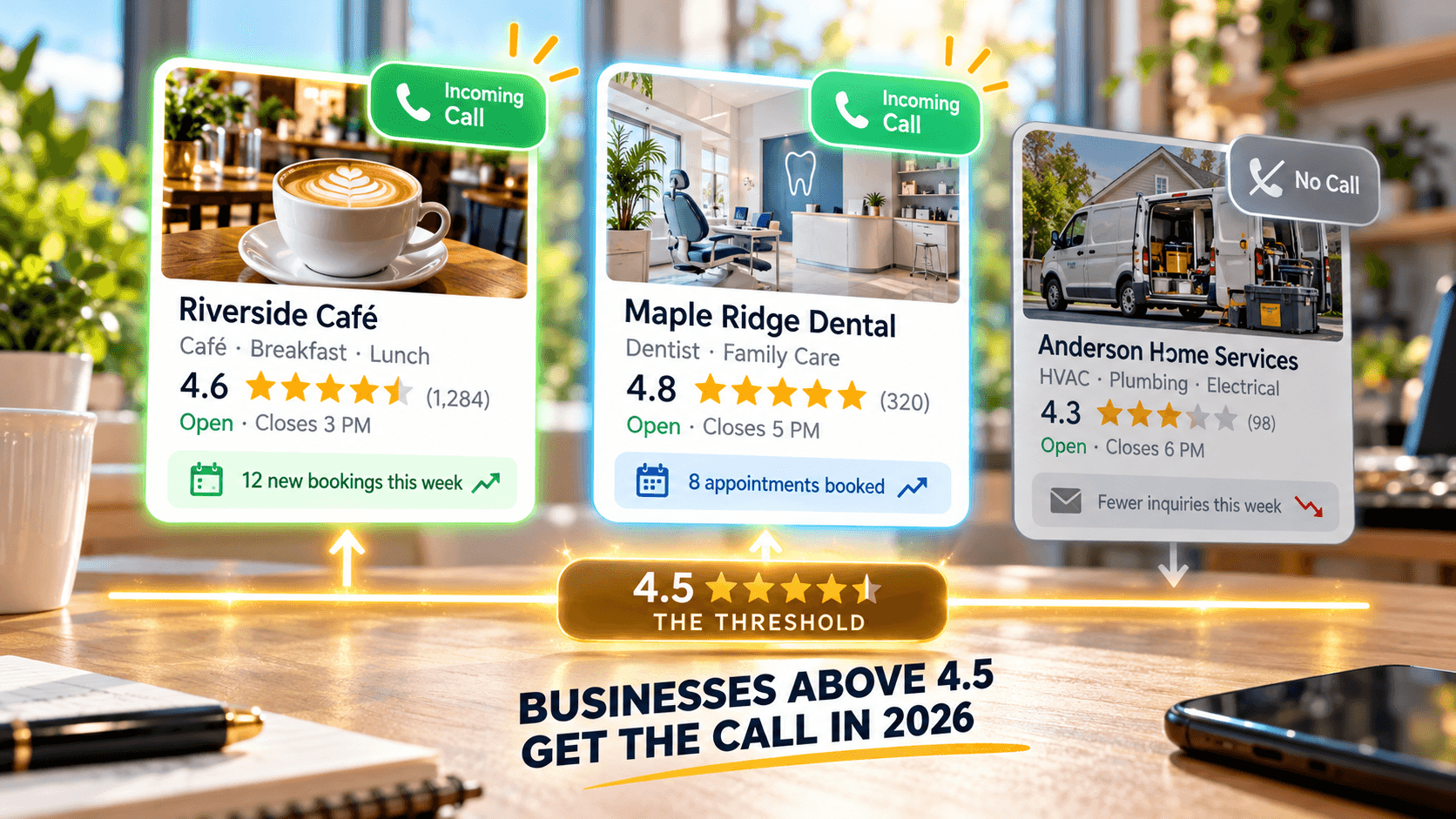
When a customer searches for your business, Google may show them the location closest to them — along with that location's review score, not your brand-wide average. That means a poorly reviewed branch can be the only version of your business a nearby customer sees.
Worse, review platforms don't always keep things neatly separated. A viral complaint about one location can show up in search results tied to your brand name, coloring perception everywhere.
The Foundation: Unified Standards With Local Ownership
The most successful multi-location operators build a centralized reputation framework — consistent response guidelines, branding standards, and escalation rules — while giving each location manager ownership of their own reviews.
Your corporate guidelines define the tone, the response time targets, and the issues that escalate to corporate (things like legal threats, health concerns, or anything that might hit the news). Location managers handle the rest, because they actually know what happened on their floor that Tuesday afternoon.
Review Generation at Scale
For a single location, asking happy customers for reviews is straightforward. For twenty locations, it needs to be automated and consistent.
Build a post-visit workflow that goes out the same day — through your POS system, your scheduling software, or your email platform. The ask should come from the location, not from a generic corporate address. Customers want to know they're hearing from the people who served them.
Track review volume and ratings per location. If one branch is getting five reviews a month while another gets fifty, there's either a participation problem or a service problem — and you want to know which.
The Monitoring Dashboard
Multi-location businesses need a single dashboard that shows every location's review health at a glance. Which locations are below your brand standard? Which ones are trending down? Which ones just got a one-star that needs attention today?
Most reputation management platforms (Birdeye, Podium, ReviewTrackers, Yotpo) offer multi-location views. Choose one that integrates with your existing operations rather than adding another login nobody uses.
The Response Protocol That Works
Three tiers of responses for multi-location operations:
Watch for Patterns Across Locations
When the same complaint shows up at multiple locations — slow service in the mornings, a particular issue with takeout orders, complaints about a new policy — that's a systems problem, not a people problem.
The review data from multiple locations is one of the most honest operational feedback tools in the business. Use it to find the issues you wouldn't catch through normal management channels.
Local SEO Is Part of Reputation
Each of your locations has its own Google Business Profile, and each needs to be optimized separately. Photos, hours, attributes, services, and reviews all factor into local search rankings. A location with strong reviews but an incomplete Google profile is leaving ranking — and customers — on the table.
Audit each profile quarterly. Make sure the name, address, and phone number are consistent across your website, your social accounts, and every major review platform.
The Key Takeaway
Multi-location reputation management isn't about doing more — it's about doing the same right things, consistently, at every address. Standardized processes, local ownership, and a dashboard that lets you see the whole board at once. The businesses that get this right don't just avoid crises — they systematically outpace competitors who are still scrambling to keep one location's reviews in shape. |



4 Comments
Join the conversation
The part about one bad location showing up in search for nearby customers is something we learned the hard way. We have four shops and our downtown location had a rough few months with a new manager. Customers searching our brand name in that zip code were seeing 3.2 stars and going to a competitor. Fixed the staffing issue but the review damage took almost a year to recover from. The three-tier response system described here is pretty much exactly what we put in place after that. Wish we had read something like this two years ago.
Derek PaulsonThat one year recovery timeline is no joke. We had something similar with our Westside location and people really do not realize how long it takes to climb back from a dip like that. Did you find that responding to older negative reviews helped at all, or was it mostly just about getting new positive ones to push the rating up?
The part about one bad location showing up in search before customers even see your overall brand rating is so real. We have four shops and our lowest rated one happens to be right off the highway so it gets the most foot traffic from people who have never heard of us. Working on getting that Google profile cleaned up but it is a slow process.
Travis M.That highway location situation is rough because those are exactly the customers you most want to impress, first timers who have no loyalty yet. Have you tried pushing a post-visit follow up text to those customers specifically? Even getting a handful more reviews a month from happy ones can start moving the needle faster than cleaning up the profile itself.