
How to Respond to a 1-Star Review Without Making It Worse |
A practical framework for turning negative feedback into a reputation win — not a reputation wreck |
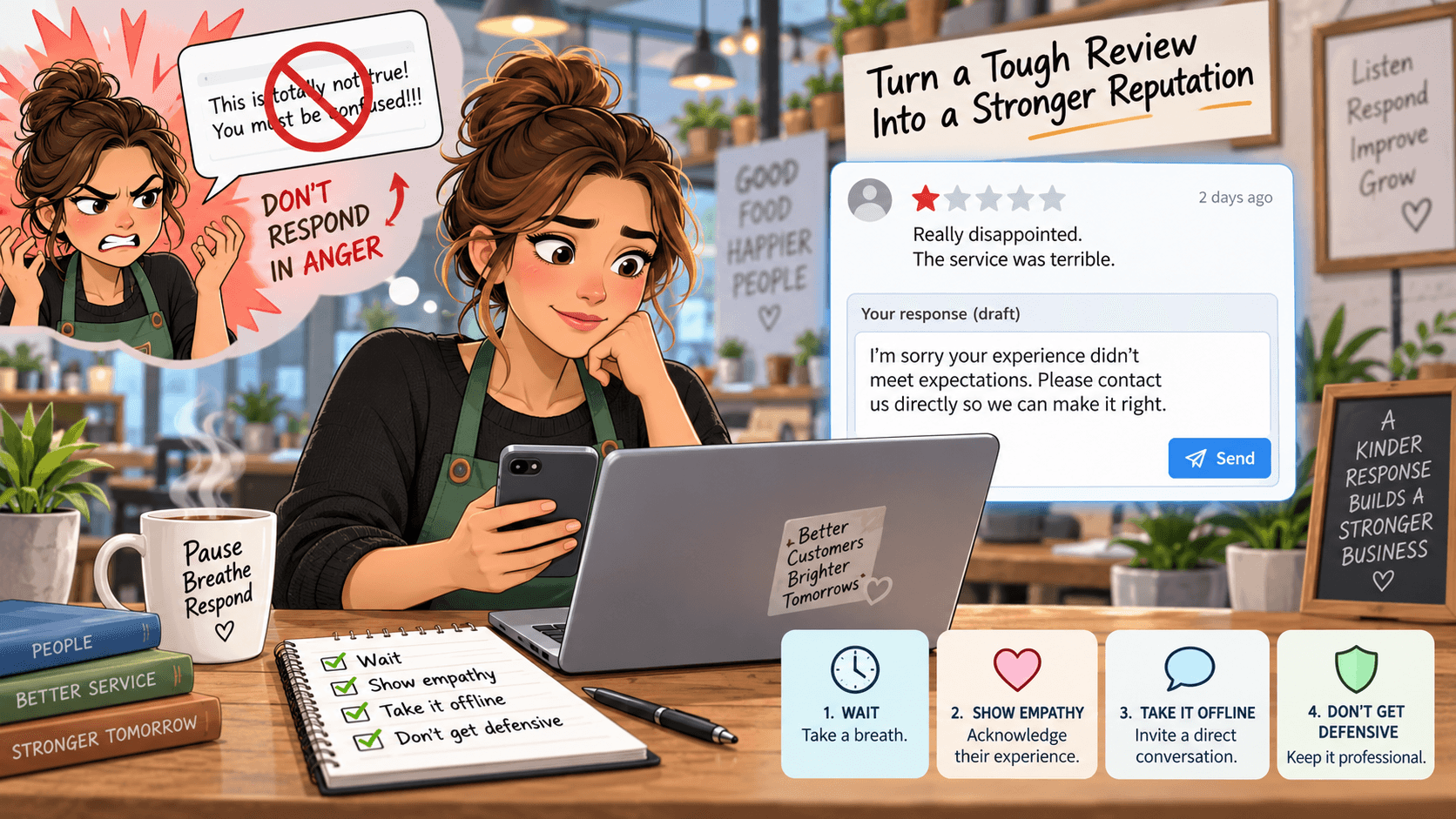
Every business owner knows the sinking feeling. You open Google, check your reviews, and there it is — one star, a scathing paragraph, and a headline that makes your stomach drop. The first instinct is to react: explain why they're wrong, fire back with facts, or simply ignore it and hope it goes away.
None of those reactions work. In fact, how you respond to a negative review matters almost as much as the review itself. A well-crafted response can turn a 1-star moment into proof that your business cares — and prospective customers are watching.
Why Your Response Matters More Than You Think
Here's the statistic that should change how you think about bad reviews: 87% of consumers say they would consider giving a business a second chance if the business responds to a negative review (ReviewTrackers). That means nearly nine out of ten people don't expect perfection — they want to see how you handle imperfection.
But it gets more strategic than that. Your response isn't really for the person who left the review. It's for the hundreds of people who will read your business's reviews in the future. Those readers are trying to answer one question: "If something goes wrong with this business, will they take care of me?"
A thoughtless response — or no response at all — tells them no. A measured, professional reply tells them yes.
The 4 Rules of Responding to a Bad Review
Rule 1: Never respond in the first hourYour emotional brain wants to defend your business. Give it 24 hours. Sleep on it. Respond with a clear head, not a racing heart. A rushed, heated reply almost always makes things worse.
Rule 2: Acknowledge the frustration before explaining anythingStart by validating the customer's experience, not by correcting their facts. "I'm sorry to hear your experience didn't meet expectations" lands completely differently than "Actually, our policy clearly states..."
Empathy first, details second. Always.
Rule 3: Take the conversation offlineYour public response should be short, professional, and end with an invitation to continue the conversation privately. Give an email address or phone number. The goal isn't to win an argument in public — it's to show other readers that you're accessible and accountable.
Rule 4: Never get defensive or make excusesEven if the review is factually wrong, your response should project calm professionalism. Future customers don't know the full story — they're judging your character based on how you handle adversity.
A Real Example: Before and After
Bad response: "We're sorry you feel that way. However, your order was delivered on time and met all specifications. We follow industry standards and cannot be held responsible for misunderstandings."
What's wrong: Dismissive, defensive, blames the customer. Anyone reading this walks away thinking the business doesn't care.
Better response: "Thank you for sharing your feedback. I'm sorry to hear your experience didn't meet the standard we aim for. I'd like the chance to look into this and make it right — please reach out to me directly at [email]. We take every concern seriously and want to earn back your trust."
What works: Professional, empathetic, action-oriented. Anyone reading this thinks, "If something goes wrong, they'll handle it."
When to Push Back (Carefully)
Not every negative review deserves grace. If a review is clearly fake, violates a platform's policies, or contains threatening language, you can and should flag it for removal. Google, Yelp, and other platforms have processes for reporting reviews that violate their content guidelines.
But if the review is simply negative — a real customer with a real complaint — respond professionally and move on. The worst thing you can do is argue with a customer in public.
Bonus: Bad Reviews Can Actually Help You
Here's something most business owners don't realize: a mix of positive and negative reviews actually builds more trust than a perfect 5.0 rating. A 2025 BrightLocal study found that consumers are more likely to trust businesses with a 4.0–4.5 star average than those with a flawless 5.0 — because perfect scores feel fake.
A single bad review, handled well, can actually strengthen your overall reputation by showing that you're real, responsive, and human.
The Bottom Line
Every bad review is a test — not of your business, but of your character. Respond with professionalism, empathy, and a genuine offer to make things right, and you'll pass that test every time. The customers reading your response will remember how you handled it far longer than they'll remember the complaint itself. |



0 Comments
Join the conversation
Be the first to comment
Share your thoughts above.