
How to Turn a Negative Review Into a Customer for Life |
The recovery playbook small businesses use to convert complaints into loyalty — and what the research says about why it works |
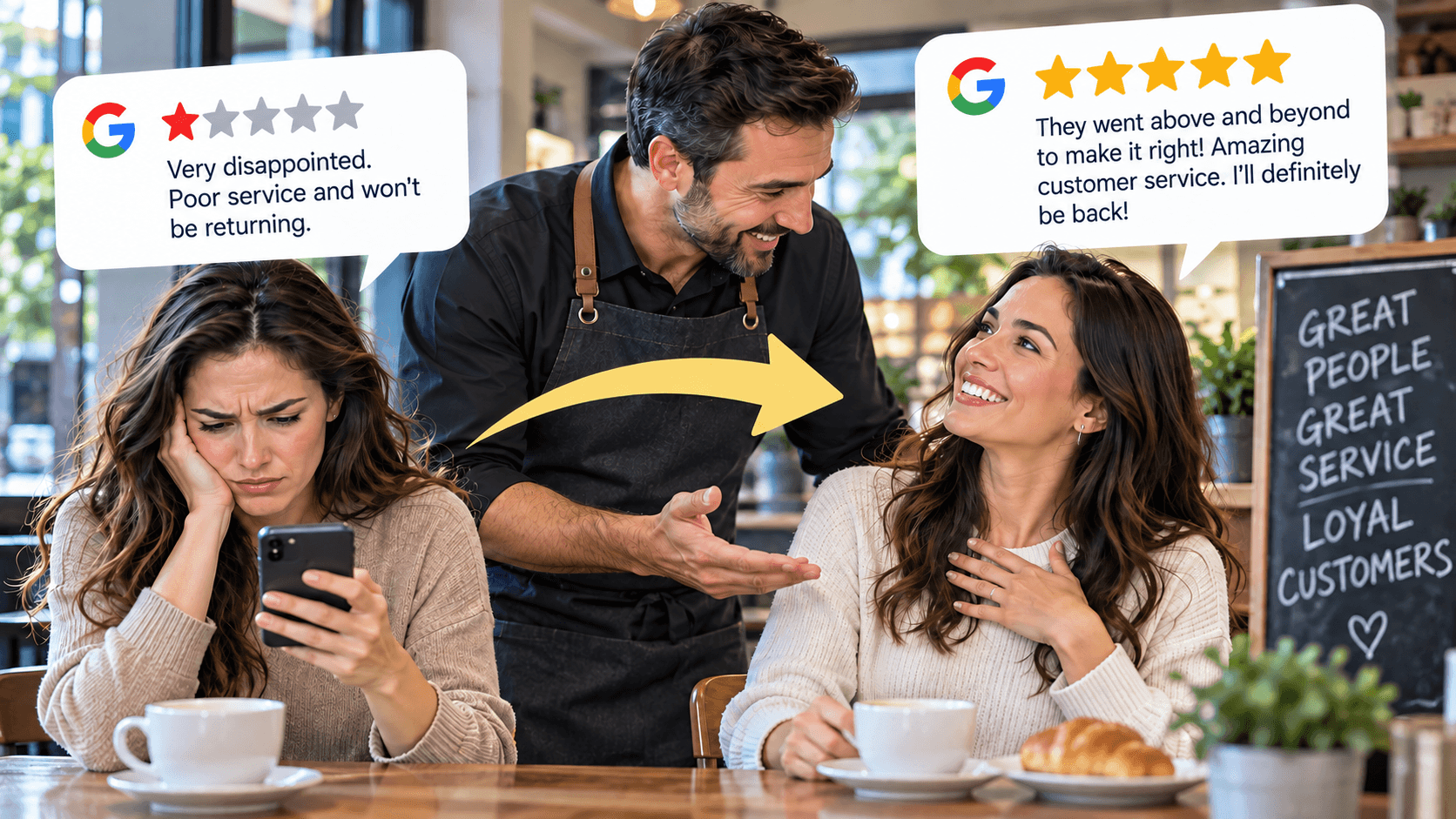
Every business owner dreads opening their Google dashboard to find a one-star review. But here's something most don't realize: a handled poorly, a negative review costs you that customer forever. Handled well, it can create one of your most loyal advocates — and signal to every future reader that you actually care.
Research from Harvard Business Review has shown that customers who experience a successful service recovery often end up more loyal than customers who never had a problem in the first place. This is called the "service recovery paradox," and for small businesses managing their online reputation, it's one of the most powerful dynamics in the review economy.
Why a Negative Review Is Actually an Opportunity
Think about your own behavior when you're researching a local business. You scroll past the five-star reviews — they're nice, but you expect them. What you actually read are the three, two, and one-star reviews, and more importantly, you read how the business responded.
A professional, thoughtful response to a negative review tells potential customers three things at once: you're paying attention, you care about the experience, and you know how to make things right. That's marketing money can't buy.
Conversely, a business that ignores negative reviews — or responds with defensiveness — sends a very different signal. According to a 2024 BrightLocal study, 87% of consumers read online reviews for local businesses, and the majority say they're equally or more influenced by how a business responds to criticism than by the criticism itself.
The Five-Step Recovery Framework
1. Respond Within 24 HoursSpeed matters. A quick response shows the reviewer — and anyone reading — that you take feedback seriously. It also prevents the complaint from festering or getting amplified on social media. Set up Google Business Profile notifications so you're alerted the moment a review appears.
2. Acknowledge the Specific ProblemDo not respond with a generic "we're sorry you had a bad experience." Name the issue. If the reviewer says their food was cold, say "we're sorry your meal didn't arrive at the temperature it should have." Specific acknowledgment is what makes a response feel human rather than corporate.
3. Take Ownership Without Making ExcusesExplanations are not the same as excuses. You can say "we were short-staffed that evening" as context, but the response must still center on what went wrong for the customer and how you'll prevent it from happening again. The reviewer needs to feel heard before they'll feel valued.
4. Offer a Concrete Path ForwardThis is where the magic happens. Give the reviewer a direct way to make it right — a phone number, an email to the owner, a specific offer to come back and try again. "Please reach out to me directly at [email] so I can make this right" transforms a public complaint into a private conversation.
5. Follow Through PrivatelyWhen the customer reaches out, deliver on whatever you offered. And then — and this is the step most businesses skip — follow up afterward to make sure their second experience met expectations. If it did, you've just earned a customer who knows you'll stand behind your word.
What to Do When the Review Is Unfair or Inaccurate
Not every negative review is fair. Some are from people who were never customers. Some describe experiences at your competitor's business. Some are just wrong.
Your response in these cases is still critical — because you're not writing for the reviewer, you're writing for everyone else who will read it. Stay factual, stay professional, and correct inaccuracies calmly. "We don't have a record of this visit, but we'd love the chance to look into it — please contact us at [email]" handles the situation gracefully without escalating.
If a review violates Google's content policy — it contains hate speech, is posted by a competitor, or describes something that didn't happen at your business — you can flag it for removal through Google Business Profile. But flagging should be reserved for genuine policy violations, not for reviews you simply disagree with.
The Numbers Behind Review Recovery
Businesses that respond to reviews — positive and negative — see measurable benefits:
Building a Response Habit
The best review management isn't reactive — it's systematic. Block 15 minutes each week to check your review profiles, respond to anything new, and track patterns in the feedback you're receiving. Over time, those patterns become a roadmap for improving the actual customer experience, not just the online one.
A negative review is a gift wrapped in discomfort. The businesses that learn to unwrap it are the ones that build reputations strong enough to weather any storm. |



15 Comments
Join the conversation
The tip about tracking patterns in the feedback is underrated. If three different people mention your parking is a nightmare, that's not a review problem, that's an actual problem you can fix.
A competitor left my husband's shop a fake one-star review a few years back and Google did nothing after multiple flags. That section about flagging being useful really glossed over how frustrating that process actually is.
PatriciaVSame experience here. Google's flagging process is basically a black hole. We had an obvious fake review, the account had one review total and was created the same week, and it still took four months and an appeal to get it removed. That part of the article is a bit too optimistic.
15 minutes a week to check reviews seems optimistic if you're running a busy shop solo. Would love to see some advice for one-person operations who barely have time to eat lunch.
jimbo_localHonestly even 15 minutes feels like a luxury some weeks. I think the more realistic advice for solo operators is to just set up the notifications and respond right from your phone when it pops up. Waiting for a dedicated time slot never really works in practice.
Not fully sold on the service recovery paradox idea. Some customers are just gone no matter what you do. I've seen businesses bend over backwards and still get a second bad review from the same person.
Rachel OstroffYou're not wrong, some people just want to be upset and nothing will change that. But I think the paradox is more about the silent majority reading the exchange than about winning over that specific reviewer. Even if they leave a second bad review, a calm professional response still looks good to everyone else.
The 4.2 stars with good responses beating 4.7 with none stat is something I wish more business owners understood. A perfect score actually looks suspicious to me anyway.
I manage social for a few local businesses and the generic sorry you had a bad experience response is everywhere. Clients think it's fine. It is not fine. Sending this to all of them today.
Donna PrewittGood luck getting them to change it. I feel like some business owners see a response as a checkbox, not an actual conversation. The specific acknowledgment point in the article is exactly right and almost nobody does it.
Honest question, does Google actually remove fake reviews when you flag them? I've heard from other business owners that the flagging process is basically useless and takes forever.
The 24 hour window is the piece most small businesses are sleeping on. I've seen negative reviews sit unanswered for weeks and by then the damage is done.
Sandra KwonA month-old unanswered negative review with no response is basically a billboard that says nobody's home. Even a quick reply buys you time while you figure out a proper response.
I left a 2-star review for a local shop last year and the owner actually called me personally. Ended up going back and now I recommend that place to everyone. This article nails exactly why that works.
The part about reading the owner's response more than the actual review is so true. I do this every single time before I try a new restaurant. A rude reply from an owner will make me skip a place even if the food looks amazing.