
The Hidden Cost of Bad Reviews: What Your Business Is Really Losing |
Beyond the star rating: the real financial impact of poor online reputation |
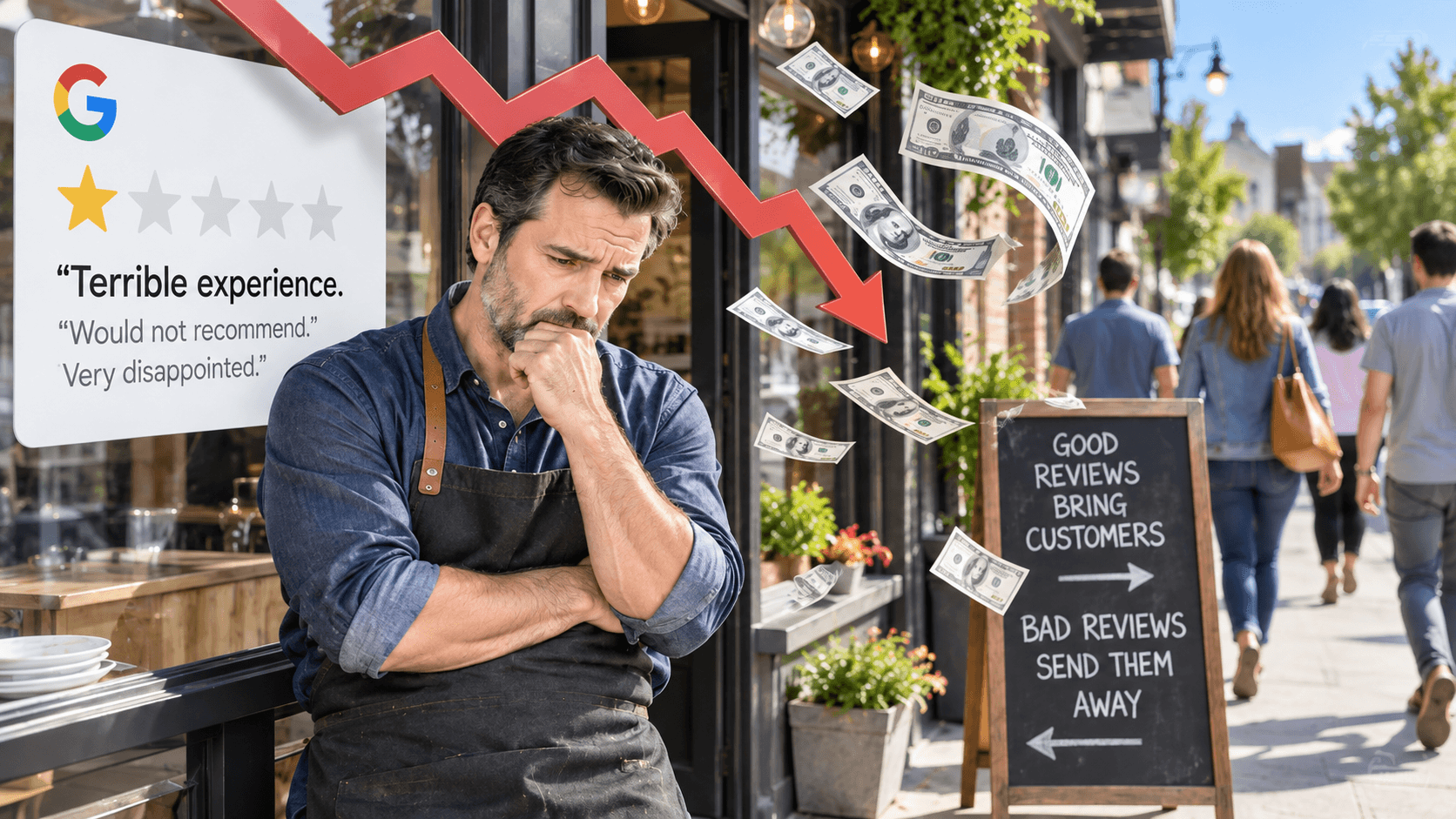
Most business owners understand that bad reviews hurt their reputation. But few realize just how much money they're losing because of it. The impact goes far beyond a lower star rating—it affects everything from foot traffic to hiring.
In 2026, with AI tools making reputation management more accessible than ever, ignoring your online reputation isn't just a mistake. It's a business decision with measurable financial consequences.
The Revenue Impact
Research from Harvard Business Review shows that a one-star increase in Yelp rating leads to a 5-9% increase in revenue. For a restaurant doing $500,000 annually, that's $25,000-$45,000 in additional revenue from a single star improvement.
But the reverse is also true. A single negative review can cost a business 22% of potential customers. Three negative reviews? That number jumps to 65%. Most business owners have no idea this is happening—they just see slower growth and assume it's the economy.
The Compounding Effect
Bad reviews don't just affect today's customers—they compound over time. A negative review from six months ago is still influencing decisions today. And because bad reviews tend to generate responses (or lack thereof), they create a feedback loop that's hard to break.
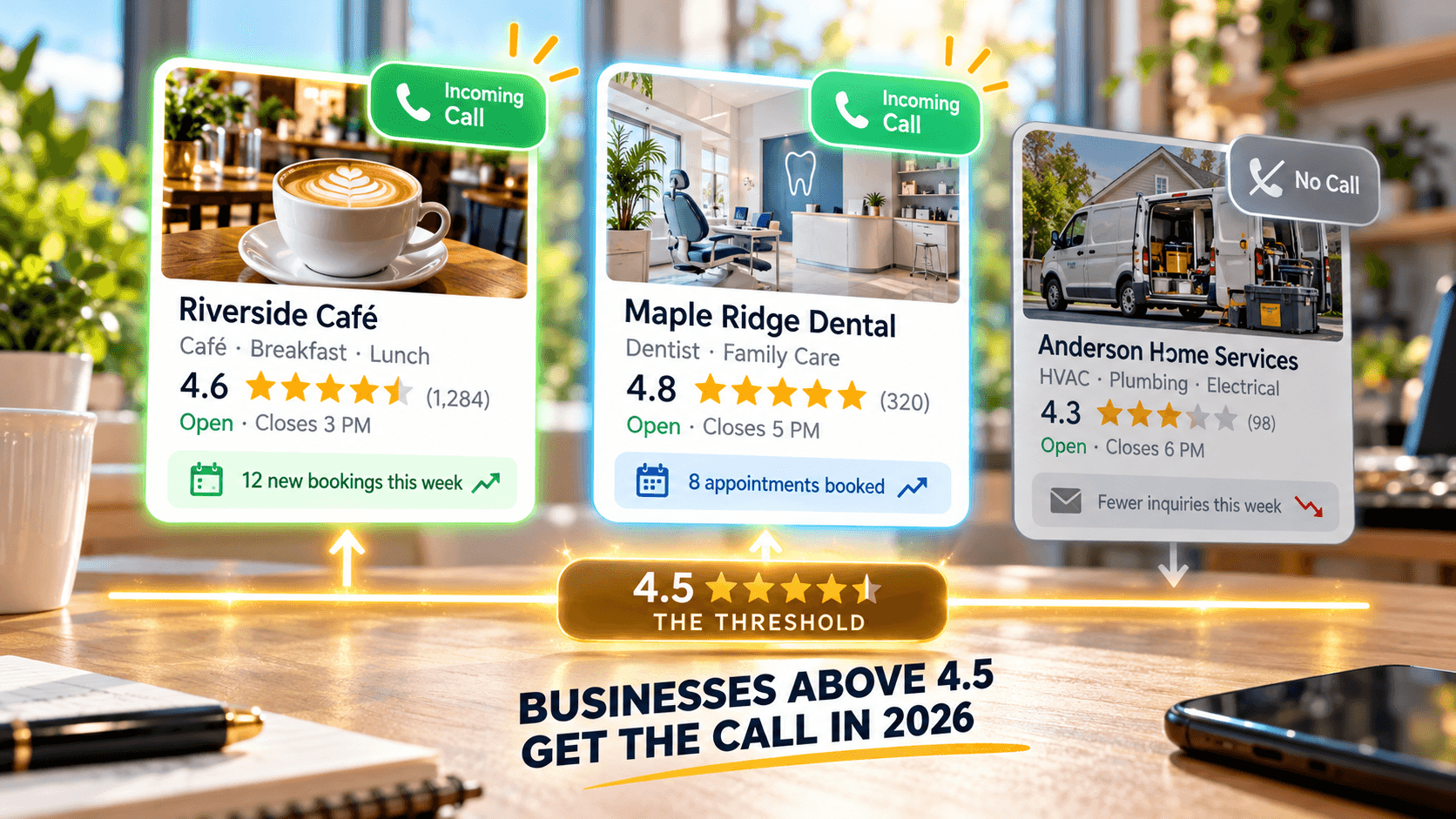
Consider this: A customer searches for "best plumber in Kingston." They see your business with a 3.8-star rating and 47 reviews. Your competitor has a 4.6-star rating with 156 reviews. Who do you think they call?
The Hiring Challenge
Here's something most business owners don't think about: your online reputation affects your ability to hire. In a tight labor market, potential employees research your business before applying. A poor rating makes it harder to attract top talent.
A retail store in New Paltz struggled to hire seasonal staff for two years. When they finally looked at their Glassdoor and Indeed ratings, they discovered they had a 2.1-star rating from former employees. They had no idea these reviews existed, let alone that they were impacting hiring.
The Trust Factor
Customers trust online reviews as much as personal recommendations. A 2026 study found that 88% of consumers trust online reviews as much as recommendations from friends and family. When your reviews are poor, you're losing the trust that's essential for business growth.
This is especially true for service businesses. A homeowner searching for a contractor will read dozens of reviews before making a call. If they see complaints about missed deadlines or poor communication, they'll move on to the next business—even if your work is superior.
The AI Solution
The good news is that AI tools make it easier than ever to manage your reputation proactively. Automated review generation helps you build a positive review base. AI monitoring catches negative mentions before they spread. And AI response tools ensure you're addressing concerns quickly and professionally.
A landscaping company in Ulster County implemented AI review management and saw their rating improve from 3.6 to 4.4 stars in eight months. They estimated the improvement was worth $120,000 in additional annual revenue.
The Bottom Line
Poor online reputation isn't just an image problem—it's a revenue problem. Every day you wait to address it, you're losing customers, revenue, and opportunities. In 2026, with AI tools available at affordable prices, there's no excuse for neglecting your most valuable asset: your reputation. |



0 Comments
Join the conversation
Be the first to comment
Share your thoughts above.