
The Most Common Reputation Mistake Small Businesses Make (and How to Fix It) |
Ignoring your reviews — especially the bad ones — is costing you customers you'll never see |

You spent years building your reputation the hard way. One great customer experience at a time. One handshake. One follow-up call. One "I'll make it right" at 9 PM on a Friday.
Now every single one of those moments lives online — and customers are judging your business before they ever walk through your door.
But here's the problem: Most small businesses treat online reviews like a weather report. Something that happens to you. Something you glance at. Something you don't touch.
And that mistake — the failure to respond to reviews — is the single most expensive reputation error small business owners make in 2026.
Why responding to reviews matters more than you think
A review without a response is a conversation happening about your business — without you in the room.
When a customer takes the time to write about their experience, they're doing three things:
Missing the third one is where most owners get hurt.
Google, Yelp, and other review platforms use review activity — the quantity, the recency, and especially the response rate — as strong signals of whether a business is active, engaged, and worth showing to searchers.
Respond to 10 reviews and you look like a business that cares. Respond to 100 and you start outranking competitors who sit silently on a pile of unread feedback.
The response time window that actually matters
The first 24 hours are critical. Research consistently shows that customers who read a review expect a business response within a day. After 72 hours, the window essentially closes — the response still looks good in your profile, but the customer who left the review has moved on.
A fast response also signals something powerful to future customers:
"This business reads what people write. This business cares about what happens here. This business is alive."
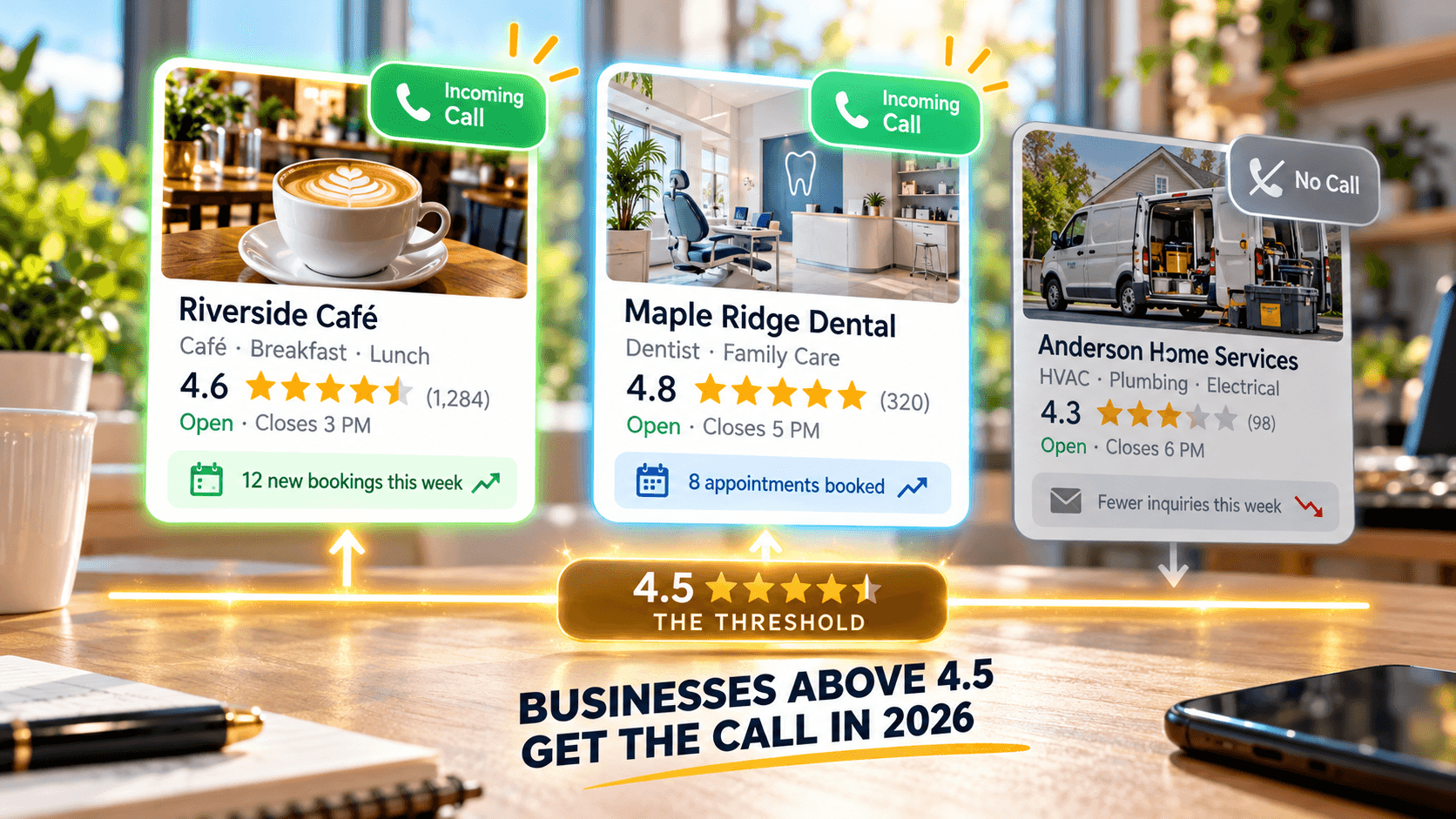
That's different from just having a 4.5-star rating. A high rating with no responses still feels impersonal — like checking into a luxury hotel with no one at the front desk.
The three response rules that separate professionals from amateurs
1. Respond to everything — the great reviews and the tough ones
Only responding to five-star praise is like only talking to people who agree with you. It makes you look thin-skinned, and more importantly, it means you're missing opportunities to recover with the customers who had a rough experience.
A thoughtful response to a 3-star review — acknowledging what went wrong and what you'd do differently — actually builds more trust with future customers than a hundred robotic "Thanks for the 5 stars!" replies ever could.
2. Write like a human — not a PR template
Customers can smell a canned response from a mile away. "Thank you for your feedback, we are committed to excellence" doesn't fix anything and doesn't comfort anyone.
A great review response:
Takes 60 seconds. Builds months of trust.
3. Build a system — don't wing it
The biggest complaint from business owners isn't that they don't want to respond. It's that responding feels overwhelming. "I have 400 reviews on Google. Where do I even start?"
Start with the last 30 days. Work backward. Commit to one review response per day until you're caught up. Then, once the backlog is gone, make responding part of your weekly routine — same time, same day, no exceptions.
The best approach: automate the tracking (get notified the moment a new review appears), and keep the responding personal. The notification is mechanical. The reply should never be.
What happens when you fix this one thing
Most small business owners who finally commit to responding to every review report three shifts, usually within 30 days:
It's not about gaming the algorithm. It's about treating feedback like what it actually is: a direct line to the people you serve.
Your first step starts today
Open Google right now. Search for your business. Read your three most recent reviews.
Respond to all three.
Don't draft them. Don't sleep on them. Do it today, while it's fresh.
That one afternoon of work will do more for your reputation than any ad campaign you could run this quarter. --- Reputation Showcase is a weekly newsletter from ReputationManagerAI.com helping local businesses build, protect, and grow their online reputation — the way the best businesses always did: one customer conversation at a time. |



2 Comments
Join the conversation
This is so true. I ignored my Google reviews for two years and had no idea a customer left a one star saying we never called them back. We absolutely did. But it just sat there making us look bad. Started checking weekly now and it makes a difference.
Ron PickettSame thing happened to my sister's salon. A review sat there for over a year saying they charged the wrong amount, which was completely false. By the time she found it the damage was done. Weekly checks are the way to go.