
Main Article Headline |
Review volume isn't flat — here's how to align your strategy with your busy seasons |
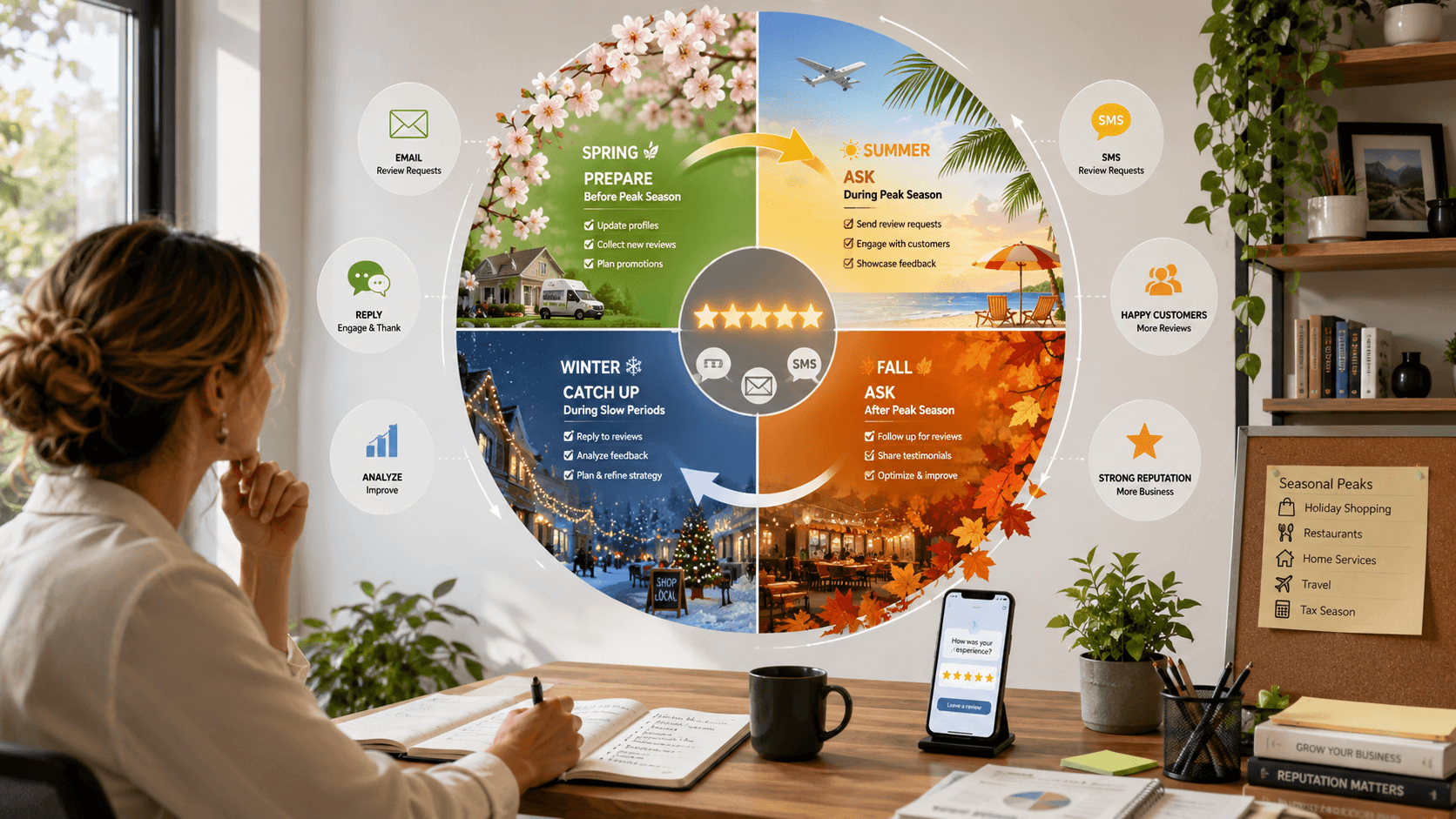
Most businesses treat review generation like it's the same every month. But review volume follows your business cycle — and if you're not adjusting your strategy seasonally, you're leaving reviews (and revenue) on the table.
Here's how to think about reviews as a seasonal operation, not a static one.
How Review Seasonality Works
Review volume tends to correlate with customer volume, but with a lag. The review peak usually comes just after your business peak — because customers need time to actually leave the review after their experience.
That means the best time to ask for reviews is during or immediately after your busiest period, when the experience is fresh and satisfaction is highest.
Peak Review Periods by Industry
Retail: November-December, especially around holiday shopping. This is when customers are most engaged and most likely to leave reviews about gifts, service, and overall experience.
Restaurants: Valentine's Day, Mother's Day, Thanksgiving, and the holiday party season. These are high-emotion occasions where people are more likely to share their experiences.
HVAC and home services: Summer cooling season and winter heating season. When your service is most needed, it's most appreciated — and most reviewable.
Travel and tourism: Summer and school holiday periods. People are in vacation mode and more likely to document their experiences.
Tax and professional services: February-April. The intensity of tax season creates strong feelings — both positive and negative — that translate into reviews.
Wedding and event businesses: Right after the event, when the experience is freshest. Don't wait weeks to ask — strike while the emotion is high.
The Slow Periods
The quietest review periods are usually your off-season. For many businesses, January after the holidays is slow. For seasonal services, it's the months when demand drops.
But slow periods are actually golden opportunities — not for generating reviews (though you should still ask), but for catching up on responses, analyzing patterns, and improving your process.
Your Seasonal Review Strategy
4-6 weeks before peak season: Set up automated email/SMS follow-ups. Save your review request links. Brief your staff on the importance of reviews. Prepare response templates for common scenarios. Make sure your review profiles are updated with current hours, photos, and information.
During peak season: Ask for reviews immediately after positive interactions. Keep the ask short and frictionless — a text with a direct link is ideal. Monitor incoming reviews daily so negative feedback gets handled quickly. Don't let complaints pile up during your busiest time.
After peak season: Follow up on any delayed reviews. Analyze recurring complaints or praise — what themes showed up? Use this data to improve operations before the next peak. Respond to any unanswered reviews from the rush.
During slow periods: Increase your ask rate slightly to keep your profile active. A steady trickle of reviews in quiet months maintains momentum and prevents your profile from looking dormant. Use the extra time to clean up your review profiles, update photos, and refine your response templates.
Special Considerations
For highly seasonal businesses (think ski resorts, beach rentals, or tax preparers), map your entire year around your operational peaks. Assign ownership for review collection and response before each season begins. Don't let the rush catch you unprepared.
For businesses with multiple peaks (restaurants with holiday rushes and summer tourism, for example), treat each peak as its own campaign. Prepare separately for each one.
The Bottom Line
Reviews don't happen on a flat calendar — they follow your business cycle. The businesses that align their review strategy with their seasonal patterns will capture more reviews when it matters most, respond faster during busy times, and use slow periods to get ahead. It's not about working harder — it's about working with the rhythm of your business.
Stay ahead of your reputation. Subscribe to ReputationShowcase.com for weekly insights on building trust that drives results. |



0 Comments
Join the conversation
Be the first to comment
Share your thoughts above.