
The Trust Shift: Why Google's 2026 Algorithm Changes Everything About How Reviews Work |
Consistency now beats volume, authenticity beats perfection, and the businesses that understand this are pulling dramatically ahead in local search rankings. |
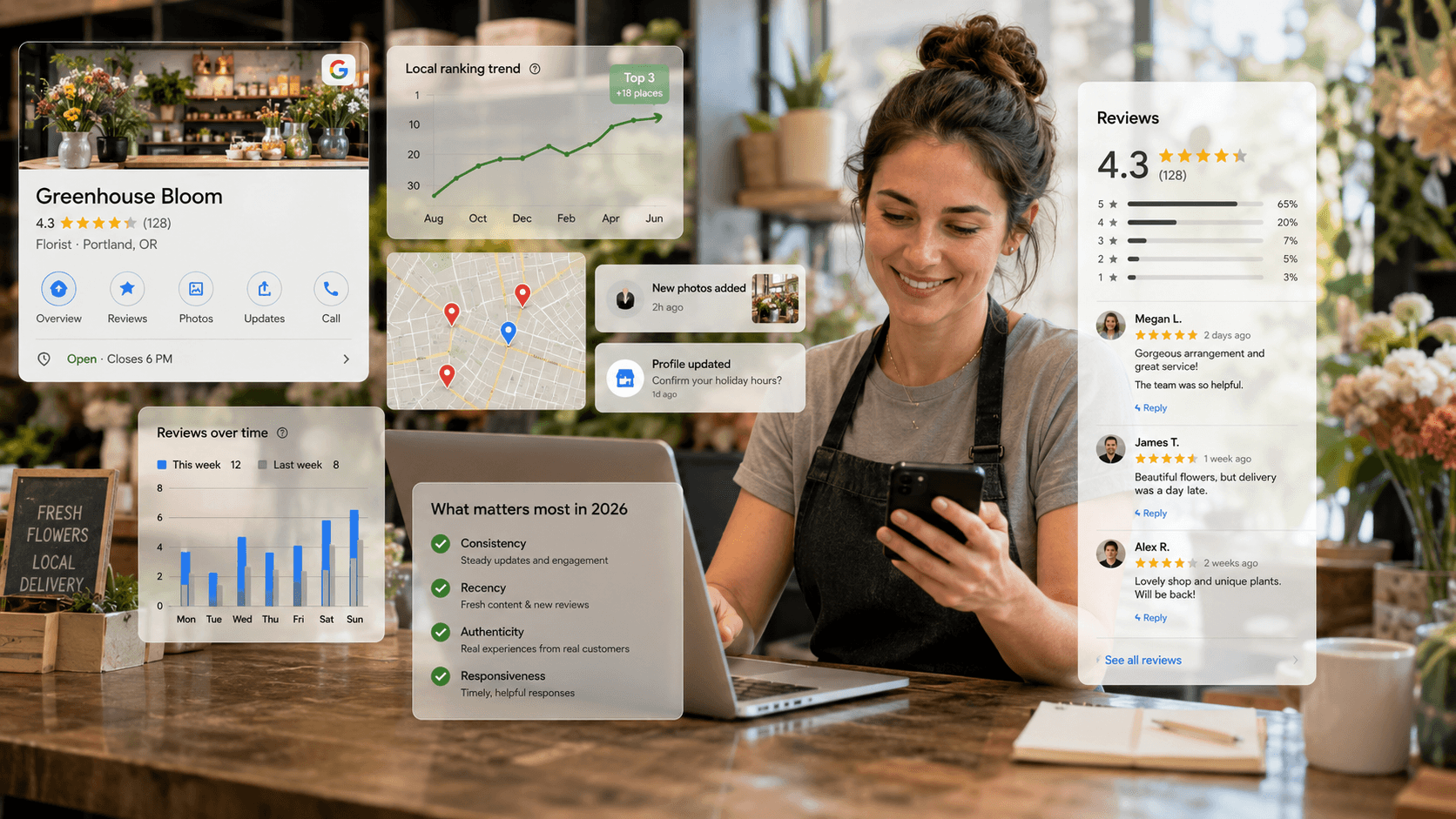
If you've been playing the reviews game the same way you did in 2024 — blasting out review requests after big sales, chasing a perfect 5.0 rating, and hoping the total count carries you to the top of Google Maps — your strategy is now working against you.
Google made a quiet but seismic change to its local search algorithm in early 2026, and most small business owners haven't caught on yet. The result: businesses with fewer reviews are outranking competitors with hundreds more, and the ones who understand why are compounding their advantage every single week.
Here's what changed, what the data shows, and exactly what you need to do about it.
The Death of "More Reviews = Better Rankings"
For years, the conventional wisdom was simple: get as many Google reviews as possible, and your local rankings would climb. That logic made sense when review count was the dominant ranking signal. It isn't anymore.
Google's 2026 local algorithm update introduced what industry analysts call the Dynamic Business Profile (DBP) Score — a measure of how actively and consistently a business engages with its online presence, not just how many reviews it has accumulated over time.
The DBP Score weighs several factors:
The practical impact is staggering. In one documented case study, a company with just 127 reviews ranked #2 in its local market — while a competitor with 482 reviews ranked #7. The difference? The top-ranked business earned reviews at a steady clip of 2–5 per week, every week, for months on end. The competitor had gone through long dry spells between review-generation campaigns.
Google's AI now precisely analyzes review timing patterns. Sporadic bursts of 20 reviews in a week followed by six weeks of silence trigger spam filters and create unnatural spikes that the algorithm penalizes rather than rewards.
The Trust Crisis Consumers Are Living Through
While Google was rewriting its algorithm, something equally significant was happening on the consumer side: trust in online reviews is collapsing.
According to PissedConsumer's 2026 Online Review Trends Report (published in Forbes in July 2026), the numbers are stark:
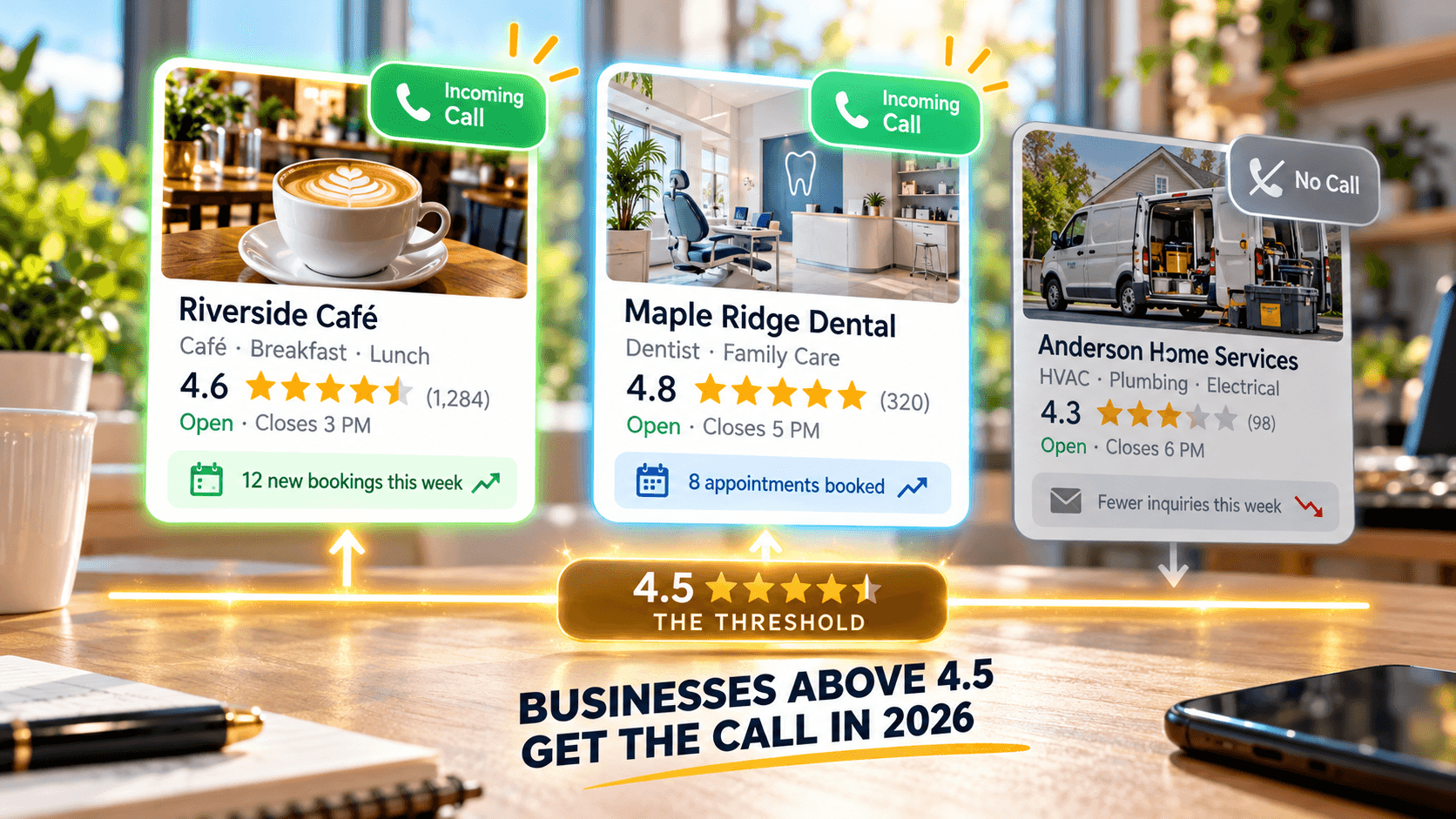
That last statistic is the one most business owners miss. A perfect 5.0 rating with glowing, generic-sounding reviews doesn't inspire confidence anymore — it triggers suspicion. Consumers have become sophisticated enough to know that real businesses have real flaws, and they actively look for evidence of those flaws in the review pool.
What Consumers Actually Look For Now
Here's where the opportunity opens up. While most businesses are still chasing volume and perfection, consumers are looking for something entirely different:
They check your responses. According to the same report, 45.1% of consumers now check how a company responds to its reviews before deciding whether to engage. Your reply to a negative review isn't just damage control — it's a public audition for every potential customer who reads it.
They trust brands that handle negatives well. 33% of consumers say they're more trusting of a brand that has negative reviews that have been responded to publicly than one with a spotless record. Making mistakes isn't the reputation killer it once was. Ignoring them is.
They want to see resolution, not just acknowledgment. Review readers are looking past the courtesy of a response. They want to see the outcome — did the business actually fix the problem? Did they stand behind their product or service when it mattered?
They read across multiple platforms. The era of a single Google review profile being your entire reputation is over. Consumers cross-reference Google, Yelp, Facebook, industry-specific sites, and social media before making significant purchases.
The New Playbook: What Actually Works in 2026
Based on the algorithm changes and consumer behavior data, here's what separates the businesses climbing in local rankings from the ones stagnating:
1. Build a Consistent Review Flow (Not Bursts)
Set up automated review requests that go out after every customer interaction — not just after big sales. The goal is 2–5 new reviews per week, every week, without fail. This steady cadence signals to Google that your business is active and trusted, and it avoids the spam-filter triggers that come from unnatural spikes.
2. Respond to Every Review — Especially the Bad Ones
Generic "Thank you for your feedback!" responses are a missed opportunity. Write specific, thoughtful replies that address the customer's actual experience. For negative reviews, acknowledge the issue, explain what you're doing about it, and invite the customer back. Every response is a public demonstration of your customer service standards.
3. Keep Your Google Business Profile Alive
Post updates at least weekly. Add fresh photos regularly. Update your services, hours, and business information whenever anything changes. Answer Q&A questions within 24 hours. The DBP Score rewards active profiles and penalizes stale ones.
4. Pursue Authenticity Over Perfection
Don't panic about the occasional 3-star review. A profile that shows a mix of ratings with thoughtful responses reads as genuine. A profile with 200 consecutive 5-star reviews and no responses reads as manufactured. Consumers can tell the difference, and increasingly, so can Google's AI.
5. Close the Feedback Loop
When multiple reviews mention the same issue — slow response times, a confusing checkout process, parking problems — fix it and then mention the fix in your responses and posts. This turns negative feedback into a visible improvement story that builds trust with future customers.
The Bottom Line
The businesses winning in local search in 2026 aren't necessarily the ones with the most reviews or the highest ratings. They're the ones with the most consistent, authentic, and responsive review profiles. Google's algorithm now rewards the behaviors that consumers also find most trustworthy — which means doing the right thing for your customers and doing it visibly are finally the same strategy.
If you're still chasing a perfect score or running review-generation campaigns in bursts, it's time to rethink. The shift has already happened. The only question is whether you'll adapt before or after your competitors do. |



0 Comments
Join the conversation
Be the first to comment
Share your thoughts above.