
Google Profile Calls Are Clicks. How Many Become Customers? |
A practical way to connect profile activity with enquiries, bookings, and completed work. |
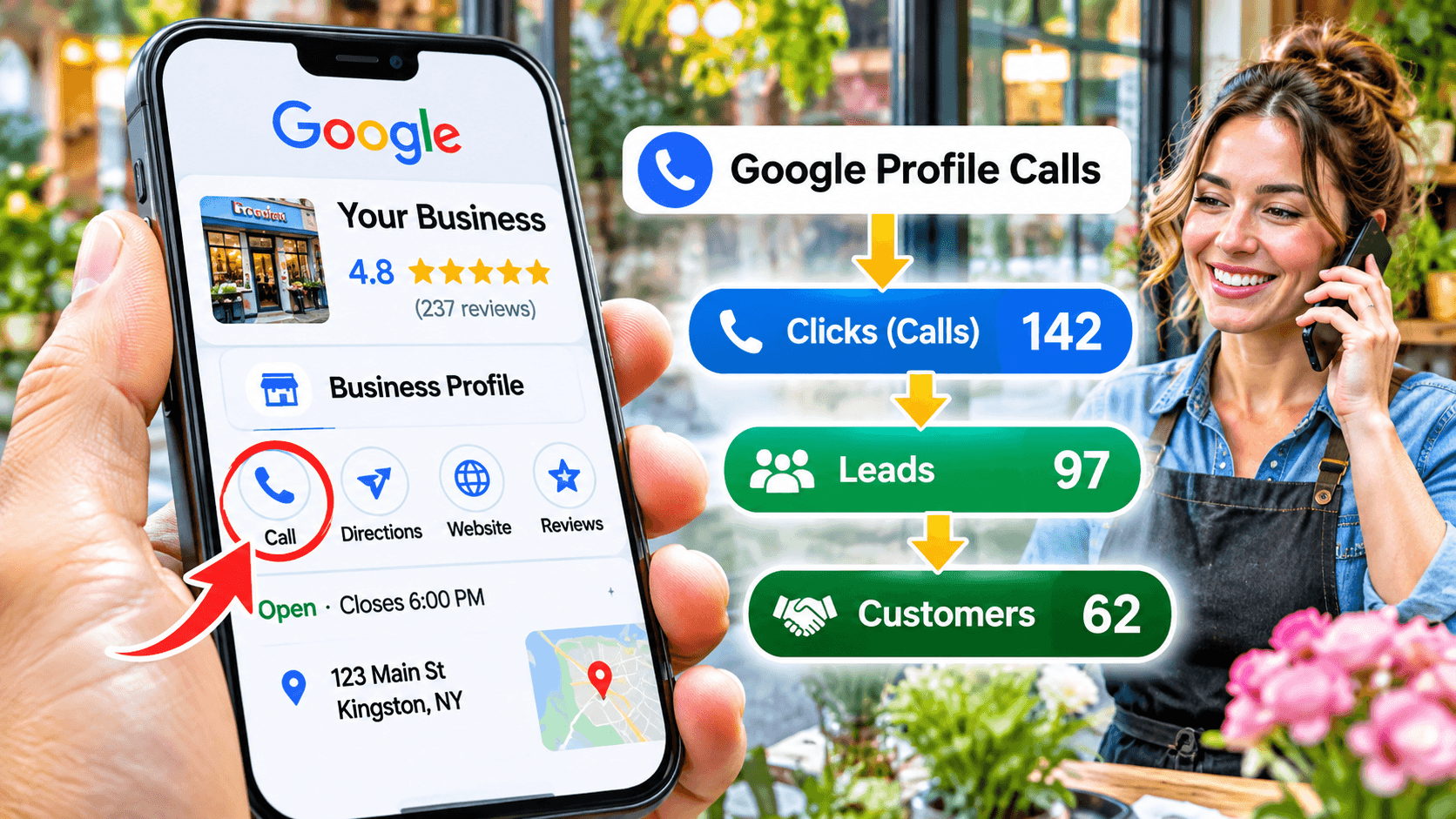
Your Google Business Profile report shows more calls this month. The front desk feels quieter, and the owner wants to know whether the business is actually gaining customers.
Start with the metric’s definition
Google’s Business Profile performance guide defines calls as clicks on the profile’s call button. Website clicks and direction requests also describe particular interactions, so read each label before treating the number as a completed customer action.
Keep those figures in your report under their original names. Add separate counts from your own records for answered enquiries, bookings, and completed jobs so the team can see where the measures come from.
Track a manageable set of enquiries
Choose one reporting period and use a consistent intake question, such as how the caller found the business. Record the answer when the customer knows, and leave it unknown when they are unsure.
Agree on what counts as a qualified enquiry before you start. For example, your team might track someone asking about a service you provide in an area you serve, then record whether that enquiry resulted in an appointment.
Look for operational gaps
If profile activity rises while bookings stall, review the intake process alongside the marketing. Check missed calls, voicemail follow-up, appointment availability, and whether the website sends visitors to a working enquiry form.
A reputation-to-booking tracking workflow brings those observations into the same review. It gives the owner a way to ask what happened after the click without attributing every new job to a single channel.
Keep comparisons consistent
Compare equivalent date ranges and note changes in opening days, advertising, service capacity, and seasonality. A busy holiday period and a quiet off-season week can produce a misleading comparison if they are presented without context.
Bring a short set of figures to the monthly meeting and choose one follow-up question the team can investigate. Local business reputation reporting becomes easier to use when the owner can trace each number to a defined activity and a specific record. |




0 Comments
Join the conversation
Be the first to comment
Share your thoughts above.